
Meet the people behind this publication


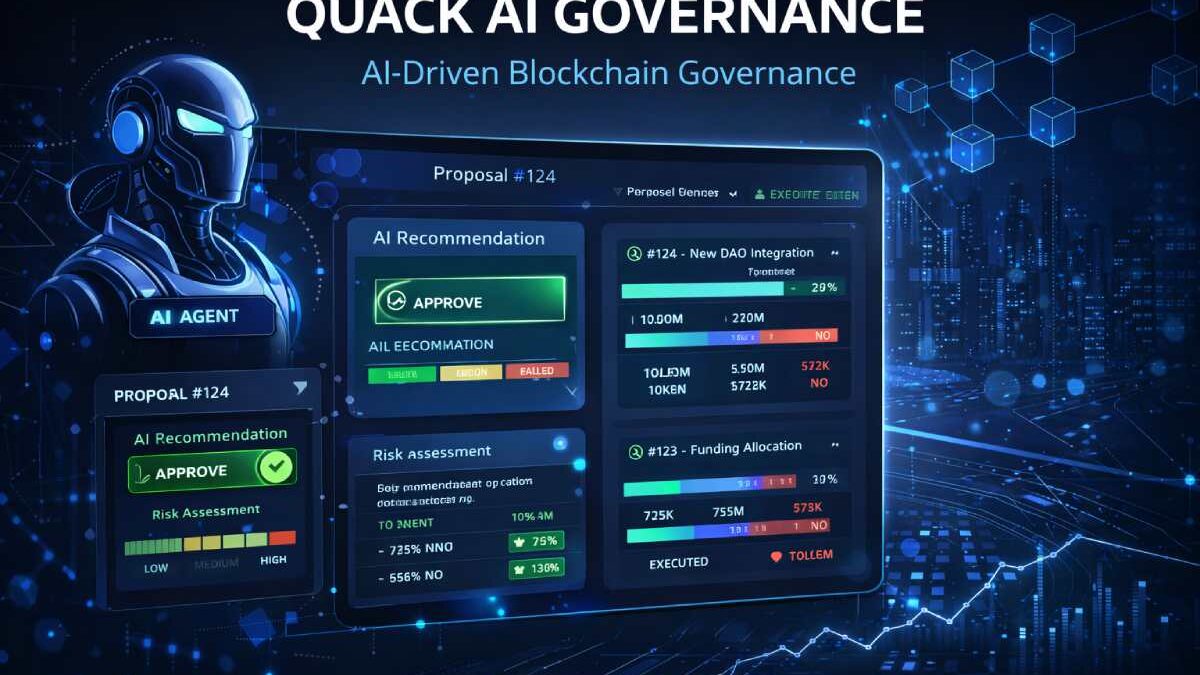
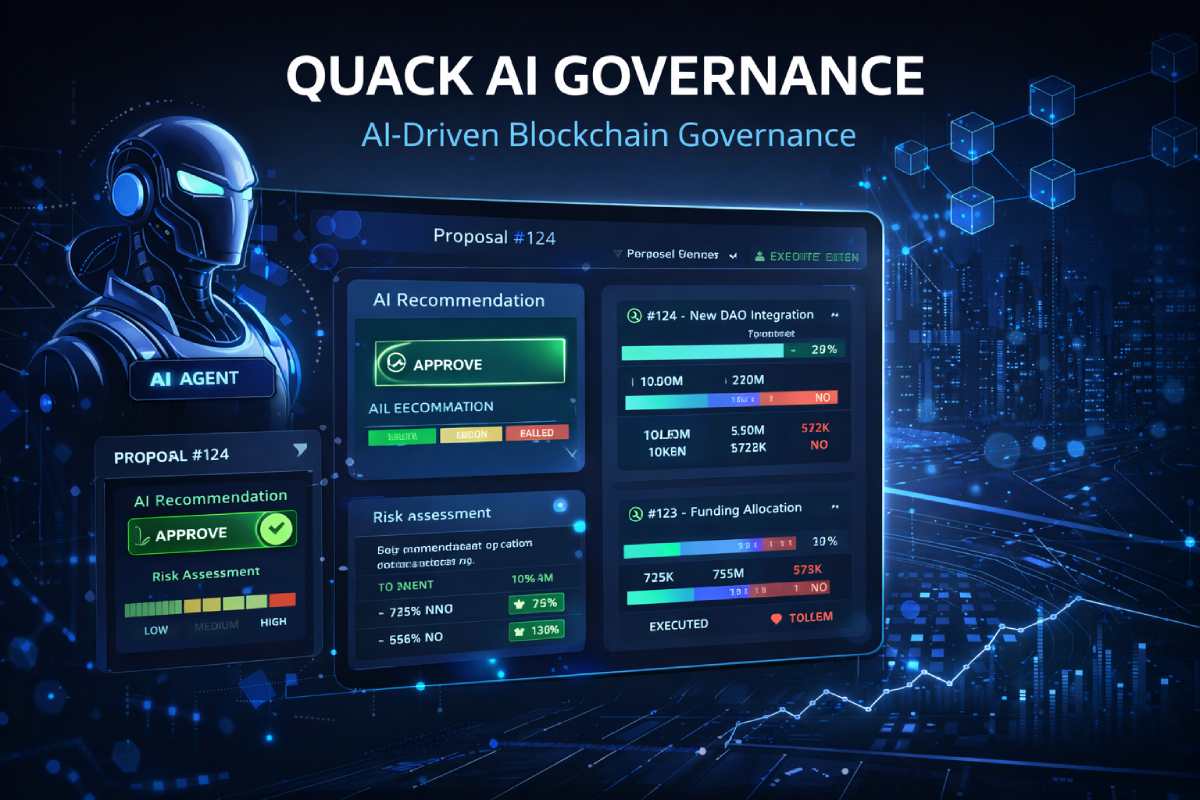
The rise of decentralized platforms has created new governance challenges. That’s where quack ai governance enters the picture — combining artificial intelligence with blockchain governance to automate decision-making, improve transparency, and reduce inefficiencies in decentralized organizations.
For Web3 developers, investors, and AI enthusiasts, understanding how AI-powered governance works is becoming essential. This article explains everything clearly — from how the protocol works to its benefits, risks, and real-world applications.
This article belongs in Artificial IntelligenceTable of Contents
What Is Quack AI Governance?
Quack AI governance is an AI-powered on-chain governance infrastructure designed to automate and optimize decision-making in decentralized organizations using AI agents, blockchain technology, and token-based voting systems.
The platform uses AI agents to analyze governance proposals, assess risks, and assist voting decisions across decentralized ecosystems.
It acts as a governance layer for Web3 ecosystems, enabling transparent and efficient decision processes.
Why AI Governance Matters in Web3
Decentralized Autonomous Organizations (DAOs) rely on community voting, but they often face:
- Low voter participation
- Slow proposal evaluation
- Fragmented treasury management
- Manual governance overhead
AI governance aims to solve these challenges by automating analysis and improving decision accuracy.
AI agents can analyze data, summarize proposals, and optimize governance decisions in real time.
Understanding AI Governance Blockchain Systems
AI governance in blockchain refers to integrating AI into decentralized decision-making systems.
Key goals include:
- Transparency in governance
- Automated risk assessment
- Scalable decision processes
- Improved community participation
AI governance frameworks ensure safe, transparent, and accountable AI deployment across industries.
How Quack AI Governance Protocol Works
Step-by-Step Overview
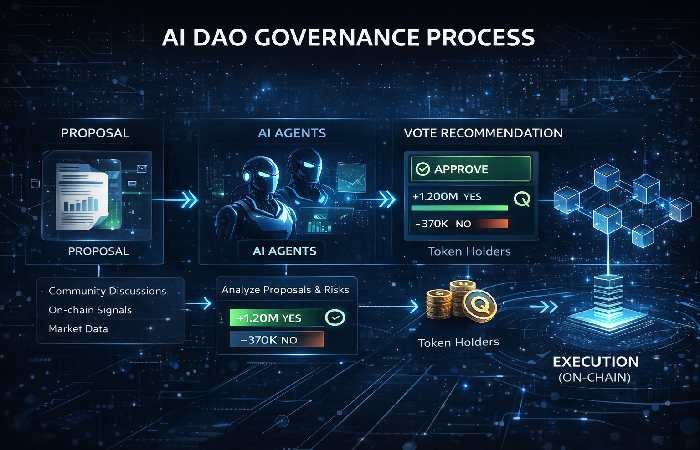
- Proposal Data Collection
AI agents scan on-chain proposals, community discussions, and market signals.
- Risk Analysis
Machine learning models evaluate financial, technical, and governance risks.
- Voting Recommendations
AI provides data-driven suggestions to token holders.
- Automated Execution
Smart contracts execute approved decisions automatically.
This reduces governance friction and human bias.
Core Components of Quack AI DAO Governance
Governance Intelligence Layer
AI analyzes proposals and community sentiment.
Execution Layer
Smart contracts automate decisions and transactions.
Compliance Layer
Ensures transparency and regulatory alignment.
Quack AI creates an end-to-end automated governance loop — from proposal analysis to execution.
Key Benefits of Quack AI Governance
- Faster Decision Making
AI speeds up proposal analysis significantly.
- Transparency
Blockchain ensures auditable governance records.
- Reduced Human Bias
AI data analysis minimizes subjective decision-making.
- Improved DAO Participation
AI summaries make proposals easier to understand.
- Cross-Chain Governance
Supports multiple blockchain ecosystems.
Potential Drawbacks and Risks
AI Bias Risk
Poor training data may influence decisions.
Over-Automation
Excessive automation may reduce human oversight.
Security Concerns
Smart contract vulnerabilities remain possible.
Regulatory Uncertainty
AI governance frameworks are still evolving globally.
Who Should Explore Quack AI Governance
| Ideal Users | Who Should Avoid It |
| Web3 developers | Beginners unfamiliar with blockchain basics |
| Crypto investors | Risk-averse investors |
| DAO founders | Organizations requiring centralized governance |
| AI researchers | |
| Automation professionals |
Real-World Use Cases
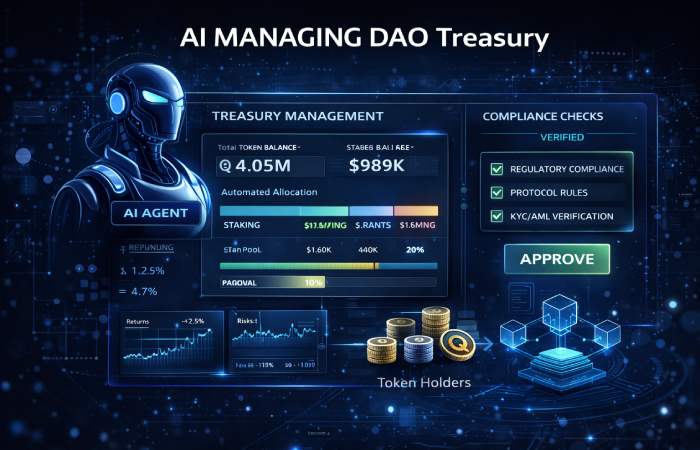
DAO Treasury Management
AI optimizes funding allocation automatically.
DeFi Protocol Governance
AI evaluates proposals faster.
Token Governance Systems
Token holders receive AI-assisted voting insights.
AI Agent Economy
Autonomous AI agents coordinate governance decisions.
AI agents are increasingly acting as economic participants in Web3 ecosystems.
Quack AI Token Governance Explained
Many AI governance systems use token-based voting.
Typical features include:
- Voting power linked to token holdings
- Governance proposal submissions
- Treasury decisions
- Protocol upgrades
AI assists token holders by analyzing potential outcomes before voting.
Myths vs Facts About AI Governance Web3
| Myth | Reality |
| AI replaces human governance | AI assists, not replaces |
| Blockchain governance is fully automated | Human oversight still required |
| AI governance is risky | Proper governance increases security |
| Only developers need it | Investors and DAOs benefit too |
Common Mistakes When Exploring AI Governance
- Ignoring governance risks
- Assuming AI decisions are always correct
- Overlooking token economics
- Not understanding DAO voting mechanisms
Learning fundamentals first is crucial.
Practical Tips for Evaluating AI Governance Platforms
Check Technology Stack
- Blockchain compatibility
- AI model transparency
- Security audits
Evaluate Governance Model
- Token distribution fairness
- Voting mechanisms
- Community engagement
Consider Long-Term Vision
- Ecosystem partnerships
- Cross-chain capabilities
- Real-world adoption potential
Future of AI-Driven Governance in Web3
Experts predict:
- AI-native DAOs becoming common
- Automated treasury management
- AI-assisted regulatory compliance
- Autonomous economic agents
AI governance may redefine decentralized decision-making globally.
First-Person Insight
From my analysis of emerging Web3 governance tools, AI-driven governance platforms like Quack AI represent a shift toward scalable automation. While still evolving, they show strong potential for improving transparency, efficiency, and participation in decentralized ecosystems.
FAQs
What is Quack AI governance?
It’s an AI-powered blockchain governance protocol that automates DAO decision-making.
How does AI improve DAO governance?
By analyzing proposals, assessing risks, and assisting voting decisions.
Is Quack AI governance safe?
Safety depends on smart contract security, AI transparency, and governance design.
Who benefits from AI governance?
Developers, investors, DAO communities, and automation researchers.
Does AI replace human governance?
No. It assists human decision-making rather than replacing it.
Also Read About:
Final Conclusion
Quack ai governance represents a major step toward intelligent decentralized governance. By combining AI automation with blockchain transparency, it enables faster decisions, better risk assessment, and scalable DAO operations. As Web3 ecosystems grow, AI-driven governance solutions like Quack AI could become foundational infrastructure for decentralized innovation.
