If you searched for deep web nest, you’re probably trying to understand whether it’s a mysterious “part of the internet,” a useful tool, or a risky download hub. That’s smart — the web is vast, and names that sound technical can be confusing.
Short answer: Deep Web Nest (deepwebnest.com) appears to be a public aggregator of entertainment, software, and streaming links — not a technical part of the deep or dark web. But the label “deep web” can trigger confusion, so let’s unpack what that term means, how Deep Web Nest relates to it (or doesn’t), and what to watch for.
Table of Contents
Clear definition: what the deep web and dark web mean
First, two widely used terms you’ll see in any accurate explanation:
-
Deep web — simply the parts of the World Wide Web that are not indexed by search engines (pages behind logins, paywalls, private databases, or dynamically generated content). It’s large and mostly harmless — your email, online banking, and many databases are part of it.
-
Dark web — a subset of the deep web that is intentionally hidden and generally accessed via special software (Tor, I2P, etc.). The dark web can host both legitimate privacy-focused services and illegal markets; it’s riskier and requires technical caution.
Important: “Deep web” ≠ “criminal web.” Most of the deep web is perfectly legal and includes everyday services. The dark web is different and needs extra caution.
So, what is Deep Web Nest?

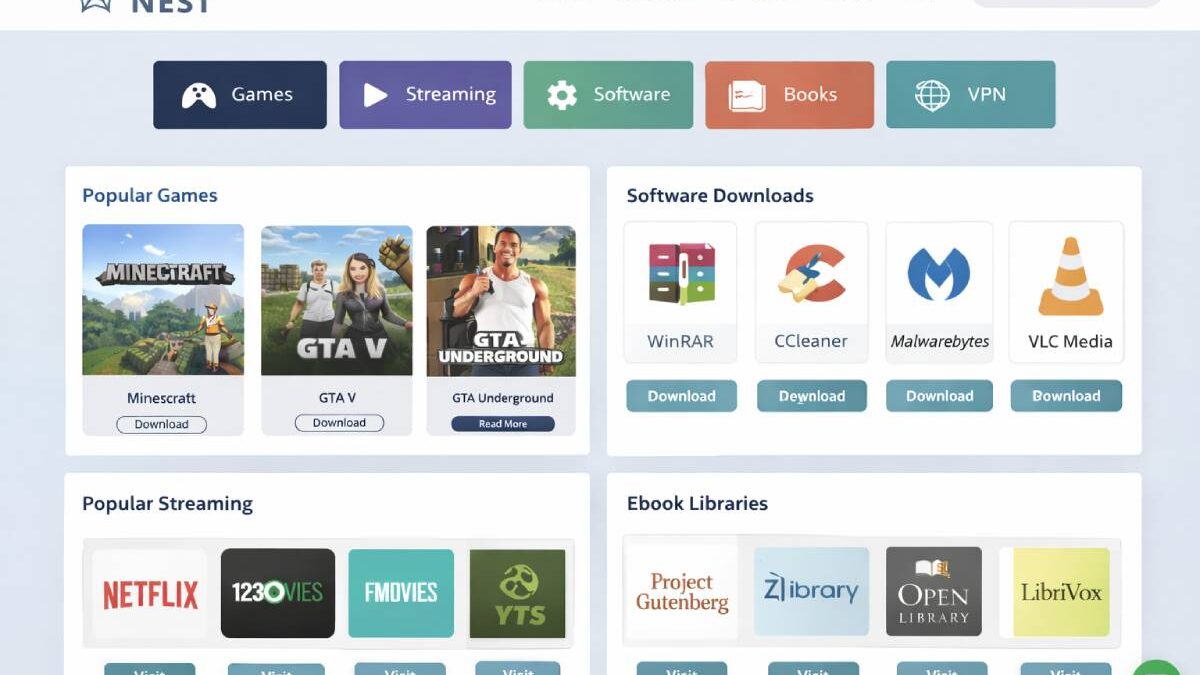
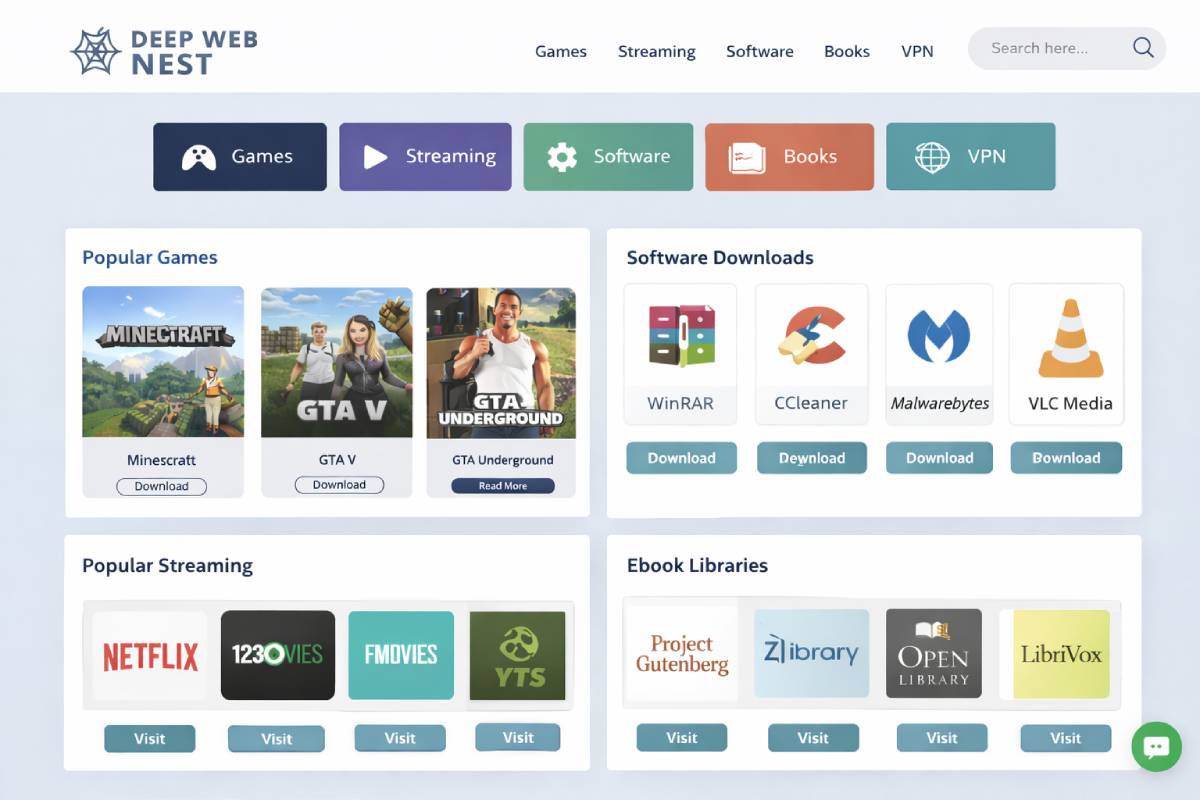
From what we can see, Deep Web Nest is an online portal that aggregates links across categories like games, streaming (movies/TV), software, books, and VPNs. It presents itself as a “gateway to entertainment and tools.” That makes it more of a curated links directory than a technical layer of the internet.
That description doesn’t automatically mean it’s bad — many link directories are legitimate — but it does mean you should treat the site like any third-party aggregator: verify content sources and watch for copyrighted or unsafe downloads.
Who this topic is intended for
-
Tech-curious users are trying to understand internet terminology.
-
Security students or researchers want clear distinctions between web layers.
-
Casual users who encountered “Deep Web Nest” want to know if it’s safe.
-
Content creators looking to reference authoritative explanations.
If you’re looking for “how to access hidden networks” or step-by-step instructions to reach darknet markets, this guide will not provide that. I’ll explain why that’s important and what safe alternatives exist.
Who should steer clear of exploring sites like Deep Web Nest?
-
Non-technical users who can’t tell legitimate downloads from malicious ones.
-
People who cannot verify copyright or licensing for software/media.
-
Anyone whose use would break workplace or local laws (e.g., downloading pirated content).
Aggregators often link to third-party files. Without verification, those files could be outdated, copyrighted, or bundled with malware. If this sounds risky for your situation, avoid it.
Benefits & drawbacks
Possible benefits
-
Quick access to curated lists of resources (games, software, media).
-
Handy for discovery if the links are legal and trusted.
Drawbacks & risks
-
Links may lead to pirated content or unsafe downloads.
-
Aggregators may not vet sources for malware.
-
Using or sharing copyrighted material can have legal consequences.
-
The site branding (“deep web”) might mislead users into thinking they’re accessing something technical or private when they’re not.
Common mistakes people make
-
Assuming a site with “deep web” in the name is the same as the technical deep web/dark web. (It’s not.)
-
Downloading executable files without scanning for malware.
-
Using streams/downloads from unknown hosts for copyrighted content.
-
Sharing credentials or personal info on aggregated or mirrored pages.
Myths vs Facts
| Myth | Fact |
|---|---|
| Deep Web Nest is a darknet portal. | No — it appears to be an aggregator website for entertainment and tools. |
| “Deep web” means illegal | No — deep web includes ordinary sites not indexed by search engines. |
| Everything on the deep web is anonymous | No — most deep web content (like private databases) isn’t anonymous; it’s just unindexed. |
| You must use Tor to reach the deep web | Not for the deep web generally — only for the dark web subset. |
Practical, safe tips & real examples
-
Verify sources before downloading. If a link leads to a file-hosting site, check the uploader, comments, and whether the file is listed on official vendor pages.
-
Use antivirus and sandboxing. Scan any executable or installer before running it. Use a virtual machine for testing unknown software.
-
Prefer official stores. For apps and software, use Google Play, Apple App Store, official vendor downloads, or trustworthy repositories (F-Droid for open-source Android apps).
-
Avoid copyrighted media from unknown sources. Streaming movies from unofficial hosts can expose you to malware and legal risk.
-
Keep the distinction in mind. If you’re trying to access password-protected resources (your workplace intranet, paywalled journals), that’s deep web behavior and usually legitimate. If you’re trying to reach anonymous marketplaces, that’s dark web territory — and higher risk.
After researching many web directories, I’ve found that the people who do best treat aggregator links as pointers, not as endorsements, and verify content before use.
Tools & categories
Typical aggregator categories you’ll see
-
Games / gaming resources
-
Streaming (movies/TV) links
-
Software downloads
-
Books / digital libraries
-
VPN recommendations
Safer alternatives
-
Games: official stores (Steam, Epic Games).
-
Movies/TV: licensed services (Netflix, Amazon Prime, local broadcasters).
-
Software: vendor websites or trusted repositories (GitHub releases, official vendor pages).
-
Books: library services, Project Gutenberg, or publisher sites.
-
VPNs: review reputable sources (trusted privacy sites and the VPN companies’ official pages).
Legal & ethical considerations
-
Copyright law varies by country. Downloading or redistributing copyrighted content without permission is illegal in many jurisdictions.
-
Malware & privacy risks. Downloading from unknown hosts can compromise devices and data.
-
No blanket “safe” guarantee. Even curated lists can contain bad actors or mislabelled content.
If you’re using the internet for research, always cite original sources and prefer official distribution channels.
Safe research practices
-
Use academic databases and institutional access (libraries, JSTOR, institutional subscriptions) for research materials.
-
If you need to access archived or obscure content, use reputable archives (such as the Wayback Machine) rather than random download sites.
-
When studying darknet phenomena for research, use published research, reputable news investigations, and legal tools — do not attempt to participate in illegal marketplaces.
FAQ
Q: Is Deep Web Nest part of the dark web?
A: No. Deep Web Nest is an aggregator/website on the surface web that curates links. It is not the dark web, which requires special software and is a hidden subset of the deep web.
Q: Does “deep web” mean illegal?
A: No. The deep web mostly includes everyday private or paywalled pages (email, banking) that search engines do not index.
Q: Are download links on Deep Web Nest safe?
A: Not guaranteed. Treat links as third-party pointers: verify sources, scan with antivirus software, and prefer official vendors.
Q: Can I use the deep web to protect my privacy?
A: Some deep web or dark web tools (e.g., Tor) offer anonymity, but they come with tradeoffs and risks; use them only for legitimate privacy needs and with an understanding of legal and security implications.
Also Read:
-
How to identify unsafe download websites — best placed in Risks or Tools section
-
online research best practices — link in the Safe research practices section
Final Conclusion
Deep Web Nest appears to be a link aggregator that collects entertainment, software, and resource links — not a technical part of the deep or dark web. That said, aggregated links can be risky, so treat them as pointers, verify sources, and always prioritize legal, trusted channels when downloading or streaming. If you’re researching the deep web and dark web themselves, rely on reputable sources and avoid any activity that could be illegal or unsafe.
High-Authority Sources Used
-
Deep web — Wikipedia.
-
What is the Deep Web? — TechTarget.
-
Deep web vs. Dark web — CrowdStrike.
-
Surface, Deep, Dark Web explanation — Infosec Institute.
-
Merriam-Webster — definition of deep web.