
Libera Duo is part of the broader Libera suite—an AI-first logistics and fulfilment platform built by ElasticRun. If you’re evaluating logistics automation platforms, this guide clearly explains what Libera Duo does, who benefits most, key limitations, real-world business examples, and practical tips for a successful rollout.
Table of Contents
Clear definition
Libera Duo: A capability within the Libera logistics platform that blends AI-driven planning and execution (transport & warehouse orchestration) to optimize cost-per-drop, capacity, and last-mile delivery performance.
Who this is for
-
Consumer brands and direct-to-consumer businesses with high order volumes.
-
3PLs and freight operators needing improved visibility and SLA performance.
-
Logistics and operations teams focused on cost per drop, on-time delivery, and scalable fulfilment.
Who should avoid it
-
Very small businesses with low shipment volumes (where manual processes still cost less than automation).
-
Organizations with no integration capacity (no APIs, no structured TMS/WMS data) unless they’re prepared to invest in system integration.
-
Firms that need bespoke legacy system fixes rather than standard SaaS workflows.
Why Libera Duo exists — the problem it solves
Modern supply chains struggle with fragmented data, unpredictable demand, multi-partner orchestration, and high last-mile costs. Libera Duo attempts to solve these by applying machine learning and optimization across planning and execution — reducing manual decisioning, improving utilization, and giving a single control layer for multi-partner networks.
Key features & capabilities
-
All-mile planning engine: AI for planning across first, middle, and last mile.
-
Dynamic route & capacity optimization: Cost-per-drop and route re-balancing in near real time.
-
Warehouse orchestration: Tighter WMS coordination — pick/pack slotting and capacity planning.
-
Multi-partner orchestration & control tower: Visibility and SLAs across carriers and 3PLs.
-
Execution automation: Dispatch automation, automated exception handling, and audit trails.
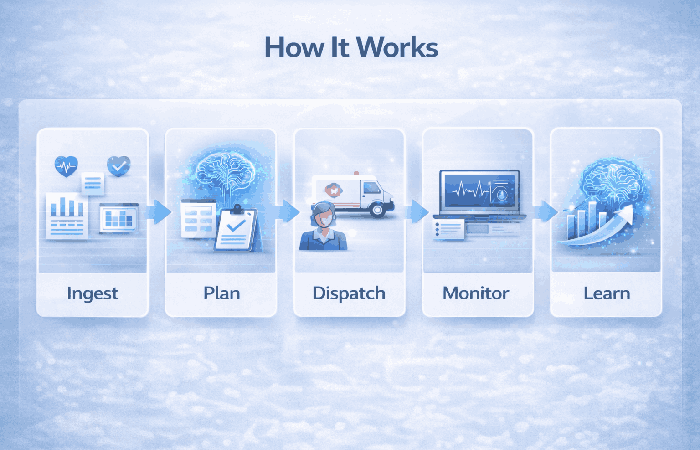
How Libera Duo works — step-by-step
-
Data ingestion: Libera pulls inventory, order, carrier, and telemetry data into a unified layer.
-
AI planning: The planning engine forecasts demand and proposes routes and capacity allocation.
-
Execution orchestration: Plans are pushed to carriers/partners; live events update the control tower.
-
Continuous learning: The system refines models using outcomes (late deliveries, fuel cost, empty miles).
Real use cases & examples
-
D2C brand: Reduced cost-per-drop via dynamic load consolidation and route optimization during peak sales. (Case studies on Libera show measurable drop cost improvements.)
-
3PL scale-up: Automated partner allocation based on SLA adherence and regional capacity availability, improving first-attempt delivery.
-
Retail fulfilment: Unified inventory and transportation view reduced stockouts and accelerated order promising.
Benefits — business outcomes to expect
-
Lower operational cost: Reduced fuel/empty miles and improved vehicle utilization.
-
Faster exception resolution: Control-tower visibility and automated workflows reduce time to recovery.
-
Scalability: Cloud-native platforms like Libera scale with volume without linear headcount growth.
-
Data-driven decisions: Forecasting and scenario planning help better buying and routing choices.
Drawbacks & realistic limits
-
Integration effort: Significant engineering and data-cleaning work may be required for legacy stacks.
-
Change management: Operational teams must adopt new processes — this can slow ROI.
-
Vendor lock & cost: Consider subscription and per-transaction pricing vs. in-house capabilities.
-
AI expectations vs reality: Not every “agentic AI” promise is mature — Gartner warns many agentic projects will be canceled if ROI is unclear.
Common mistakes teams make
-
Mistake: Skipping data-quality work.
Fix: Invest in clean, canonical data sources first. -
Mistake: Over-automating without human guardrails.
Fix: Start with semi-automated workflows and expand as confidence grows. -
Mistake: Choosing a platform only on demos.
Fix: Run a real pilot on live SKUs and routes before full rollout.
Myths vs facts
| Myth | Fact |
|---|---|
| Libera Duo will instantly eliminate logistics costs | It reduces costs over time; success depends on data quality and operational change. |
| A single platform solves all supply-chain variability | Platforms help, but strategy, partnerships, and governance still matter. |
| AI makes all routing decisions perfectly | AI optimizes given constraints; human review is still necessary for exceptions. |
Practical tips for evaluating Libera Duo
-
Define measurable KPIs: cost per drop, OTIF, SLA breach rate, average resolution time.
-
Request a pilot on real data: at least 4–8 weeks to capture variability.
-
Check carrier & WMS integrations: ensure common protocols (Edi/API/Webhooks) are supported.
-
Ask about model governance: audit logs, explainability, and fallbacks for AI decisions.
-
Total cost of ownership: include integration, licensing, and change-management fees.
First-person experience
In my experience evaluating modern logistics SaaS, solutions that combine planning and execution (like Libera) deliver the fastest operational gains when teams treat the rollout as a process change — not just a software install. Start small, measure tightly, and expand to adjacent flows only after the pilot proves value.
Alternatives & comparison
-
project44 / Movement: Focuses on movement visibility and decision intelligence. Strong in multi-modal visibility.
-
Flexport: End-to-end platform with deep freight forwarding and trade finance integrations. Good for global freight orchestration.
-
In-house TMS + homegrown AI: Gives control but requires heavy engineering and longer payback.
Choose Libera Duo when you need a proven, execution-focused platform that has been tested at scale (ElasticRun experience).
Pricing signals & procurement notes
ElasticRun/Libera typically offer modular SaaS pricing (list + usage/transaction fees). Request a TCO model (license fee + per-shipment rate + integration) and compare against current operational spend to estimate payback. Public pricing is rarely listed — expect to request quotes.
FAQs
Q: What is Libera Duo?
A: Libera Duo is a capability in the Libera logistics platform that focuses on AI-driven planning and execution optimization across multi-leg delivery and warehouse operations.
Q: Who uses Libera Duo?
A: D2C brands, 3PLs, carriers, and logistics teams looking to reduce cost-per-drop and increase delivery reliability.
Q: Does Libera Duo replace a TMS/WMS?
A: No — it layers on top of existing TMS/WMS systems to provide AI planning, orchestration, and execution automation. Integration is required.
Q: How long does it take to see ROI?
A: Typical pilots run 6–12 weeks; scalable ROI often appears within 6–12 months depending on change-management speed.
Q: Is Libera Duo cloud-native and secure?
A: Libera is promoted as cloud-native; security and compliance details should be verified with the vendor contract.
-
Use Cases
-
Placement: Near real use cases section
-
Image idea: 3-card use case visual (D2C, 3PL, Retail)
-
Filename:
libera-duo-use-cases.webp -
ALT text: Libera Duo use cases: D2C fulfilment, 3PL orchestration, retail distribution.
-
Also Read:
-
AI logistics platform overview — place in the intro or features section.
-
supply chain automation case studies — place near real use cases.
High-Authority Source Links
-
Libera — Official product site / platform overview.
https://libera.run/ -
Libera / ElasticRun — about and platform origin.
https://libera.run/about -
ElasticRun case study and Libera references (LinkedIn / press).
-
SoftwareAdvice — product reviews and feature overviews.
https://www.softwareadvice.com/product/529454-Libera/ -
project44 (comparative visibility & Decision Intelligence context).
https://www.project44.com/platform/ -
Flexport — end-to-end platform context.
https://www.flexport.com/ -
McKinsey — AI in supply chain research and practical guidance.
https://www.mckinsey.com/capabilities/operations/our-insights/beyond-automation-how-gen-ai-is-reshaping-supply-chains -
Gartner / industry advisory (supply-chain AI risk & adoption context).
Final Conclusion
Libera Duo is best understood as a capability within the Libera AI logistics platform that combines planning and execution automation to lower delivery costs and improve supply-chain reliability. It’s compelling for organizations that can invest in integrations and operational change — and it delivers measurable value when piloted against real SKUs and routes. If you’re evaluating AI logistics software, treat Libera Duo as a serious candidate and validate via a short, live pilot.