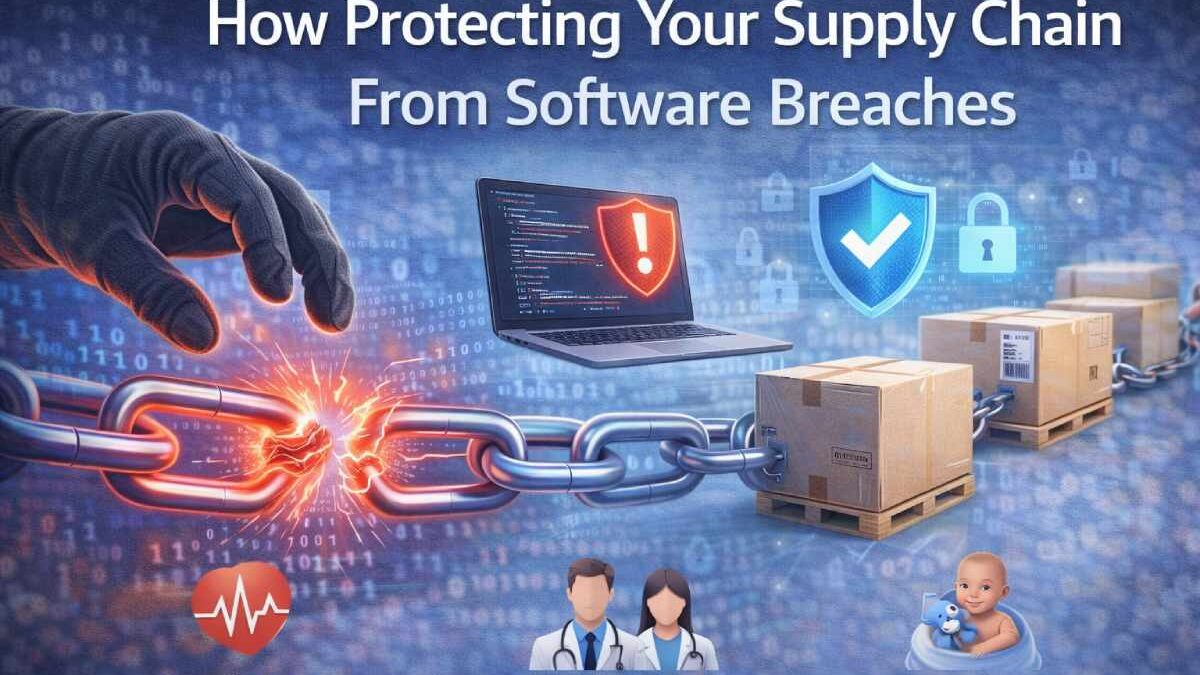

Protecting Your Supply Chain – Software is now a major security vulnerability in the supply chain. In 2025, the number of breaches caused by software issues doubled worldwide, with over 70% of businesses experiencing at least one breach that stemmed from third-party software or upstream components. Unlike hardware breaches, which are typically contained and unable to spread past one area, software breaches can. If just one software component is compromised, it can impact everything from your ERP and WMS to IoT devices and cloud platforms. The good news is there are steps you can take to protect your entire supply chain from software breaches. Regular patches, a zero trust approach, and proper monitoring will all help prevent security incidents and keep your supply chain secure.
Stay on top of software updates
Unpatched vulnerabilities are a major entry point for hackers, so you need to keep all software in the supply chain up to date. In fact, new research has uncovered a total of 4.6 billion software vulnerabilities across 58 million IoT devices, which goes to show just how much of a risk software can be for supply chain security. So, always apply updates to cloud software, warehouse management systems, enterprise resource planning systems, and IoT firmware as soon as they’re available. It’s also a good idea to keep an eye on vendor alerts for new security patches. Many software platforms and IoT devices will automatically tell you when new patches are available, so look out for that. Not all updates are equal in urgency though, and you should always apply patches for “high-risk” issues immediately. Less-urgent updates, on the other hand, can wait for scheduled maintenance windows, but just remember to keep track of them all so nothing gets missed.
Control access with zero trust
30% of data breaches now involve a third-party, which is a huge 100% year-on-year increase, according to the 2025 Verizon Data Breach Investigations Report. In supply chains, third-parties can be software vendors, suppliers, logistics partners, or contractors who may at some point need temporary access to your systems. If just one permission is set incorrectly or one account compromised, attackers can then get in and access the whole system.
To reduce this risk, you need to implement a zero-trust strategy where no user, device, or software component is automatically trusted. In fact, 65% of businesses have already adopted this approach, according to Gartner, and it can reduce security incidents by 50%. As part of zero-trust, always verify software updates and components before you install them to block malicious code and prevent breaches. Your vendors should provide SBOM (Software Bill of Materials) documents, which list all the components in their products, so vulnerabilities can be spotted and addressed straight away. Next, set everyone’s access based on their role and responsibilities, so employees can only see what they need to do their job, and no more than that. So your warehouse team should only be able to see inventory and shipping information, while your finance team can only access billing and order information, for example.
Monitor devices to keep software secure
Hardware devices that interact with software are also particularly risky. For example, a compromised warehouse smart sensor can be all the foothold an attacker needs to access the connected software. That’s why you need to monitor hardware and track device behavior in real time. You can use security monitoring tools or SIEM (Security Information and Event Management) platforms to do this. They’ll track network traffic and user/device activity in real time, and if they spot anything suspicious, they’ll flag it. Things like unusual server connections or sudden spikes in network activity could mean a breach that needs investigating. You should also segment your networks so that if one device gets hacked, the damage can’t spread. So, create separate network zones for each different system you use, like ERP, WMS, and IoT devices. This keeps each system isolated and unable to communicate with another unless you allow it.
Software has become a major weak point in supply chain cybersecurity, but it doesn’t have to be. With the right patches, a zero-trust approach, and proper monitoring, you can stay ahead of threats and protect your supply chain.