


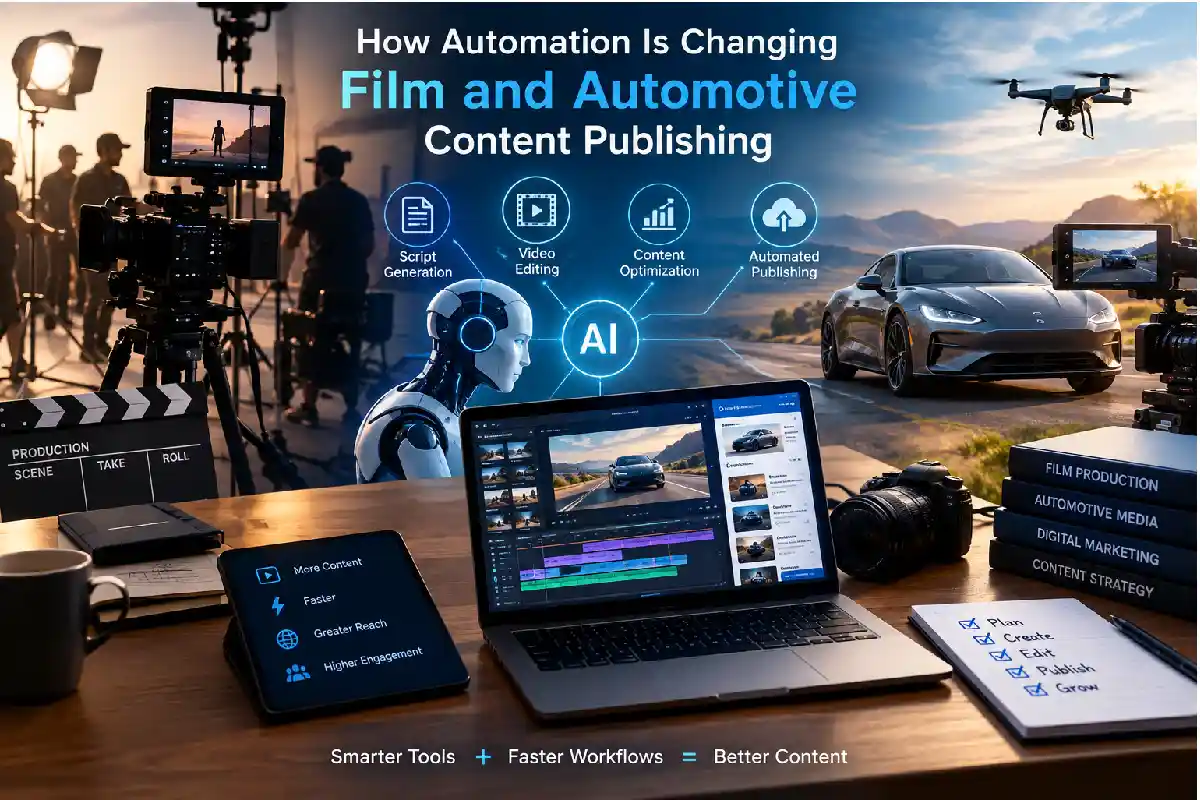
How Automation Is Changing Film and Automotive Content Publishing: Automation is reshaping more than factory floors and vehicle systems. It is also changing how businesses plan, produce, and distribute content. Film studios, automotive brands, dealerships, and media publishers all face the same practical challenge: audiences expect a steady stream of useful material, but good work still takes time and judgment. The strongest approach uses automation to remove repetitive steps while leaving creative decisions to people.
Table of Contents
Why Content Workflows Need Automation
A typical publishing process involves many separate tasks: gathering ideas, assigning writers, collecting drafts, checking facts, editing, preparing images, scheduling posts, and reviewing performance. When each step is managed through scattered messages and spreadsheets, deadlines slip and useful work gets repeated. A clear workflow makes responsibilities visible and gives every piece of content a path from brief to publication.
Automation can help with routine coordination. A new assignment might create a task, notify the editor, set a due date, and move the draft to review once it is submitted. Templates can standardise briefs and approval checklists. These small efficiencies matter when a company is producing several kinds of content at once, such as vehicle explainers, launch coverage, interviews, reviews, and industry news.
Where Automation Helps—and Where It Does Not
Tools can assist with transcription, draft outlines, headline options, formatting, and content calendars. They can also help teams sort feedback or identify gaps in a publishing schedule. Used carefully, these functions free editors to spend more time on reporting, accuracy, tone, and the needs of a particular audience.
Automation is less reliable when a task depends on context or trust. A system may summarise a film plot, but it cannot automatically provide a critic’s considered interpretation. It may generate a comparison of two cars, but a writer still needs to check specifications, explain the driving experience, and distinguish meaningful differences from marketing language. Human review is essential wherever factual errors, copyright, safety, or reputation are at stake.
That balance is especially important in entertainment publishing. Film audiences look for news, criticism, interviews, and recommendations, not simply a high volume of interchangeable posts. Publishers seeking relevant outlets can explore movie guest posting sites as one way to understand the range of film-focused blogs and websites available. The editorial fit should come first: an article needs to suit the publication and give its readers something worthwhile.
Build a Repeatable Process Before Adding More Tools
Buying software before agreeing on a process can make a disorganised workflow faster without making it better. Start by mapping the stages a piece of content passes through and deciding who owns each one. Then look for repeated delays: Are briefs incomplete? Do approvals sit unattended? Are writers waiting for research or images? Solving the source of the delay is more useful than automating every task in sight.
A practical workflow might include a short brief, a named editor, a clear deadline, a fact-checking stage, and a final approval checklist. Automated reminders can flag overdue work, while a shared calendar can prevent several launches or features from competing for the same slot. Keep the process light enough that contributors will actually use it. Too many mandatory fields and approval layers can become a new bottleneck.
Scale Output Without Lowering Standards
When publishing demand grows, teams often need additional writers, designers, editors, or video specialists. Hiring should be tied to a specific gap rather than a vague goal to publish more. A film campaign may need an interview writer and a video editor; an automotive business may need technical explainers, photography, and social clips. Clear scopes and consistent review criteria help external contributors produce work that fits the brand.
Freelance marketplaces can make it easier to find people for different parts of that workload. Osdire, for example, offers services across categories including writing, design, video, and marketing. Its article on how to increase content output discusses structured workflows, tools, and hiring as ways to expand production without abandoning quality. The useful lesson is that capacity comes from combining a workable process with the right skills, not from simply asking existing staff to publish faster.
Before adding volume, define what quality means for each format. A review may require firsthand experience and transparent sourcing; a news update needs timely, verifiable details; a buyer’s guide needs accurate specifications and clear comparisons. Editors can use checklists to make these expectations consistent, while still allowing writers room to find an individual voice.
Measure the Results, Not Just the Number of Posts
More published pieces do not automatically mean better performance. Track the measures that match the purpose of the content: useful readership, completion rates, qualified inquiries, returning visitors, or audience feedback. Also record production time and the number of revisions. If automation reduces administrative work but increases factual corrections, the process needs adjustment.
Review these measures regularly and retire tools that add friction without a clear benefit. The best workflow is not the one with the most automation; it is the one that makes dependable publishing easier. For media and automotive businesses alike, that means using technology to handle predictable tasks, giving skilled people responsibility for judgment, and making every article earn its place with readers.
