

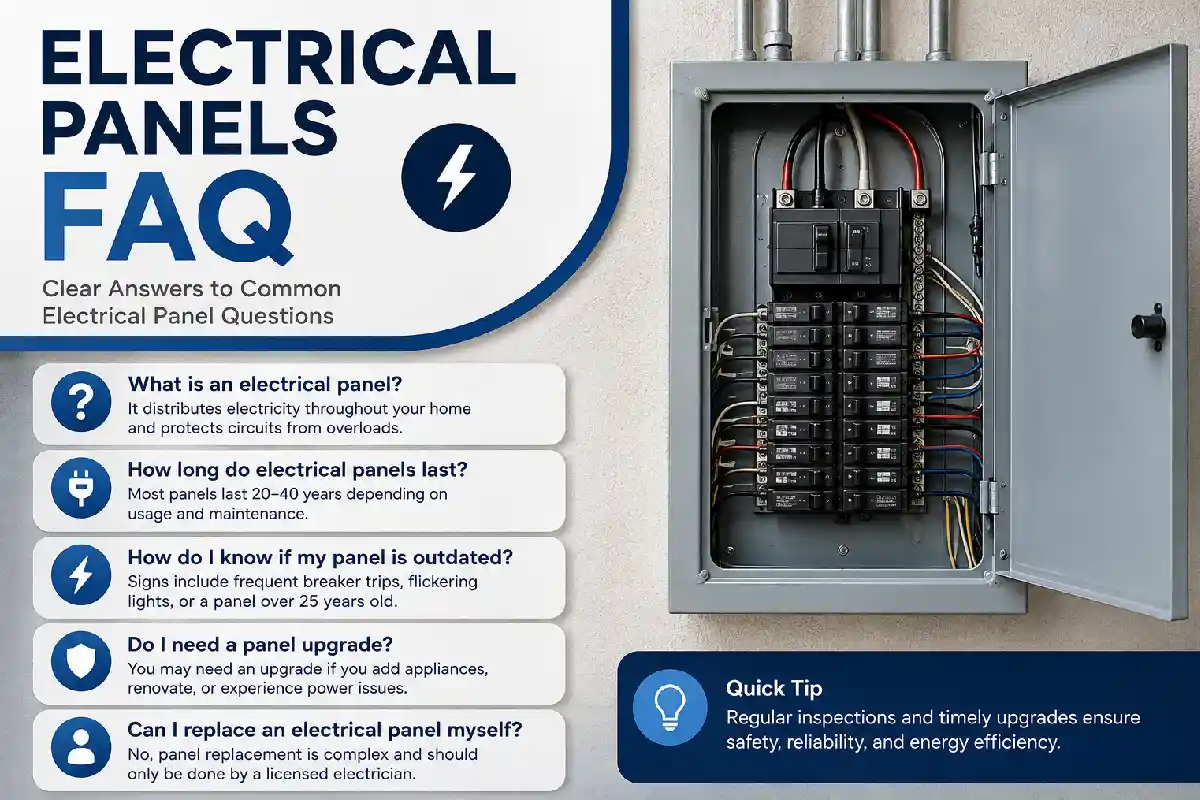
Electrical Panels FAQ: The panel is the part of an electrical project that everyone notices when something goes wrong. A delayed shipment can stall the crew. The wrong rating can create a compatibility problem. And a supposedly “available” component that turns out to be unavailable? That is how a simple order becomes a scheduling headache.
For contractors and property professionals, a few basic questions can make sourcing electrical panels much easier.
Table of Contents
What Should I Check in an Electrical Panel Rating?
Start with the project’s electrical requirements. The appropriate rating depends on the property’s electrical load and the demands placed on the system. Contractors should review the required amperage and configuration before ordering rather than choosing a panel simply because it is locally available.
Compatibility also matters. Voltage, phase configuration, breaker requirements, enclosure specifications, and connection details should be checked against the existing system and project plans. In other words, “It looks like the old one” is not a technical specification.
Why Does Panel Compatibility Matter?
Electrical panels are components within a larger system, so the panel cannot be evaluated in isolation. A replacement may need to work with existing service equipment and compatible breakers.
Contractors should verify model information and relevant specifications before purchasing. This becomes especially important when replacing older equipment, where finding a visually similar product may not mean finding a suitable replacement. A few minutes reviewing specifications can prevent much longer conversations later.
How Long Does It Take to Source an Electrical Panel?
Lead times vary depending on the equipment required, supplier inventory, and project specifications.
Standard items that are already in stock may be sourced relatively quickly. Less common configurations or specific components may require additional time. Contractors should therefore ask about actual availability rather than relying on a general shipping estimate.
This matters most when installation is tied to a firm project schedule. If the panel arrives after the crew is scheduled to complete the work, the delivery has effectively become part of the project’s labor problem.
Should Contractors Pay More for Faster Availability?
Sometimes. If waiting several days could leave workers idle, postpone other trades, or delay project completion, expedited sourcing may be worth the additional expense. If the installation is weeks away, however, paying a premium simply for speed may offer little practical benefit.
The sensible approach is to compare the cost of faster sourcing with the actual cost of delay.
Where Can Contractors Check Available Options?
Supplier selection deserves the same attention as the product itself. Contractors should look at inventory information, product identification, specifications, communication, and delivery expectations before placing an order.
For those sourcing electrical panels and related components, Verified Breakers is one supplier contractors can consider when evaluating available equipment.
The important thing is to confirm what is actually being offered and whether it fits the requirements of the project.
What Should I Ask Before Placing an Order?
A short checklist can prevent a surprisingly long list of problems.
Ask:
- What is the panel’s exact model and rating?
- Is it compatible with the intended application?
- Which breakers are compatible?
- Is the equipment new, used, or refurbished?
- Is it currently in stock?
- What is the expected lead time?
- Are the required quantities available?
- Can supporting components be supplied at the same time?
These questions are hardly glamorous. They are also much cheaper than correcting a bad order.
Final Thoughts: Availability Is Only Half the Answer
Finding electrical panels is not simply a matter of locating the fastest supplier or the lowest price. Contractors need the right combination of rating, compatibility, condition, availability, and delivery timing.
A panel that meets the project’s requirements and arrives when needed is far more valuable than one that is merely inexpensive or quickly shipped.
The best sourcing decision is usually the least dramatic one: verify the details, confirm availability, and make sure the equipment fits the job before it reaches the jobsite.
