
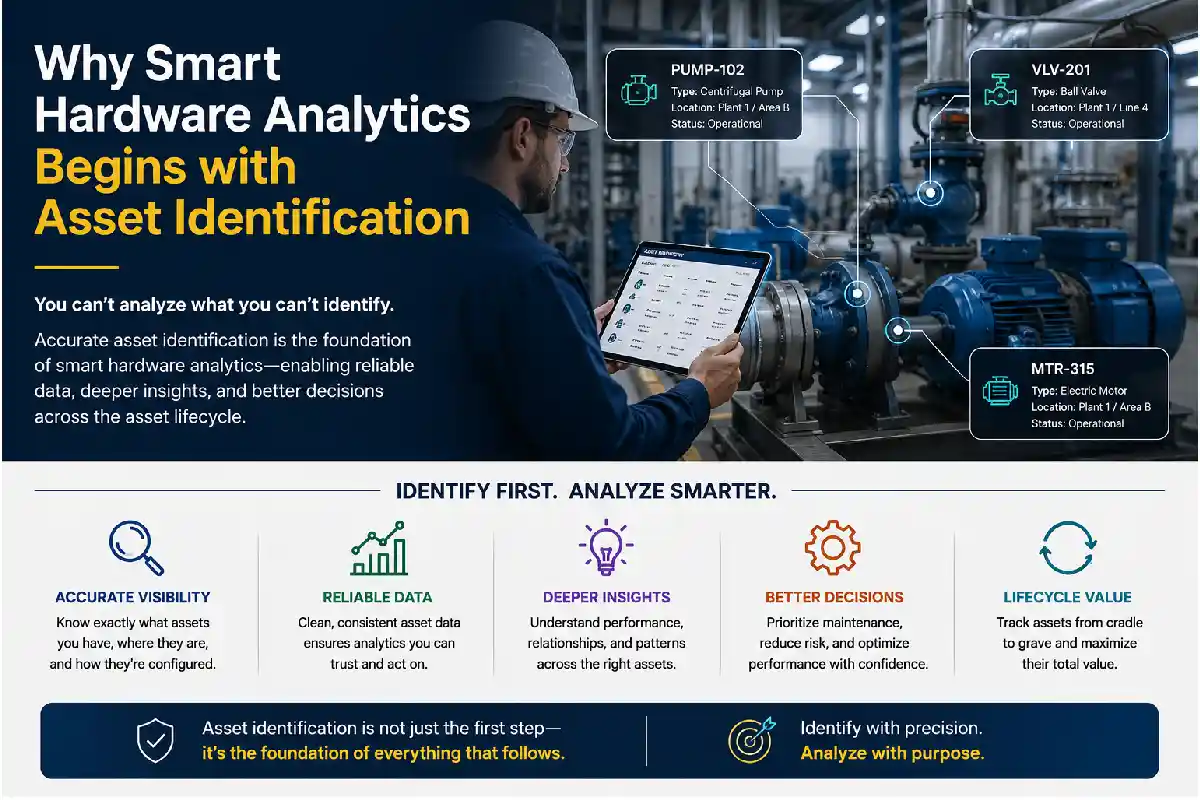
Why Smart Hardware Analytics Begins with Asset Identification – Buildings may seem to run practically on their own, aided by routine equipment maintenance, but getting building management right involves making the best use of analytics. The number of smart or IoT-connected buildings is estimated to surpass 115 million, and many building managers rely on a consistent stream of data to achieve goals such as sustainability and cost savings. As efficient as current software may be, however, it can only do so much if equipment isn’t properly identified. Consistent asset identification or labeling is vital for teams wishing to make the most of data analytics.
Table of Contents
The Systems that Collect Data
Buildings produce data from numerous systems, with most smart buildings having at least five. Building Management Systems (BMS) are used to monitor and control main equipment and fixtures, including HVAC, lighting, ventilation, fire safety, and security. Energy Management Systems (EMS) analyze energy consumption, identify inefficiencies, and help to reduce utility costs. IoT sensors are connected to a multitude of devices to measure parameters such as temperature, occupancy, vibration, air quality, and similar metrics. CMMS/EAM software stores information about physical assets, including maintenance histories, repairs, inspections, and asset life cycles. Finally, smart meters measure electricity, gas, or water consumption, helping building managers to view consumption patterns and identify cost-saving opportunities.
Why Labeling Hardware Is Vital
Buildings are home to a host of hardware or equipment, including HVAC units, boilers, chillers, pumps, electrical panels, lighting systems, elevators, and fire safety equipment. What they have in common is that they are valuable, require maintenance, and need management throughout their life cycle. Data-producing systems mean very little if hardware isn’t labeled consistently across the board. Because multiple data collection systems manage the same equipment, assigning unique identifiers (for instance, PUMP-25, CH-003, or AHU-020) allows each system to refer to the equipment consistently, preventing confusion.
How Are Assets Tagged?
Building managers use numerous ways to tag key assets, including QR codes, barcodes, RFID tags, and durable engraved metal or plastic labels. Codes and RFID tags are particularly popular because technicians who maintain assets can simply scan them with their phones or dedicated scanners to instantly access their digital records. The information they obtain includes maintenance history, manuals, warranty information, and recent inspection reports. With this data, they can locate assets, plan for maintenance and replacements, and optimize asset performance to reduce costs and downtime.
The Key Benefits of Correct Labeling
Asset tagging offers businesses numerous benefits, including operational efficiency. Teams can save a considerable amount of time by instantly knowing where all assets are. Financial savings can also be made. Companies can prevent losses from theft or misplacement. They can also quickly discover hardware issues and fix them promptly, rather than allowing equipment to deteriorate and break. Asset identification and tagging also help ensure that all assets comply with regulations. Audits can be created easily thanks to the availability of current, accurate records. Inventory control is another advantage for those with a smart asset-tracking system. Businesses can avoid overstocking or stockouts, saving time and money. Sustainability is also easier to achieve when factors such as energy expenditure are tracked in real time.
Best Practices
Businesses seeking to track assets effectively should begin by creating a smart labeling system that will serve them well in the long term. One good way to start is by assigning a unique, logical identifier based on factors such as the building, floor, equipment type, and asset number. It is equally vital to use durable asset tags. Depending on factors such as temperature, companies can opt for engraved metal or plastic labels, QR codes, barcodes, or RFID tags that are resistant to heat, moisture, chemicals, and outdoor exposure. Staff training is also key; teams must learn to use the correct asset identifiers when recording maintenance, inspections, and repairs. Additionally, regular audits can help identify missing or duplicate records.
Modern buildings are typically connected to online data-gathering systems. The IoT helps companies save time, energy, and money while ensuring compliance with relevant regulations. Labeling assets consistently and relying on data analytics software can help them know the location and condition of equipment and systems, ensure maintenance is carried out effectively, and repair issues before they become costly or require the purchase of new equipment.
